
Teen driver car maintenance is one of the first genuinely adult responsibilities teenagers take on — and one that most adults don't handle particularly well either.
Teen driver car maintenance is one of the first genuinely adult responsibilities teenagers take on — and one that most adults don’t handle particularly well either. The day you hand your teenager a set of car keys is one of the great milestones of parenthood. It is also, quietly, one of the most anxiety-inducing. Not because you don’t trust them behind the wheel — you’ve done the work, sat through the lessons, watched them parallel park seventeen times. The fear is different. It’s the fear of the thing they can’t see coming. The warning light they ignore. The oil change they forget. The tire that’s been slowly losing pressure for three weeks while they drive forty minutes to school every morning.
Car maintenance is one of the first genuinely adult responsibilities teenagers take on — and it’s one that most adults don’t handle particularly well either. Studies consistently show that deferred maintenance is the number one cause of avoidable car repairs. The average driver waits far too long on oil changes. Nearly a third of cars on the road have at least one tire significantly underinflated. And teenagers, who are managing school, jobs, social lives, and the general chaos of being seventeen, are not going to remember when the cabin air filter was last changed.
That’s not a criticism. It’s a design problem. And design problems have solutions.
This guide is for parents who want to get ahead of it — before the tow truck call, before the mechanic hands you a $2,800 estimate, before the “I thought you were handling that” conversation. Here is everything you need to know about keeping your teenager’s car properly maintained, and the one habit change that makes all the difference.

The Real Risk Isn't Their Driving. It's What Happens Between Drives.
Teen car accidents get all the attention, and rightly so — distracted driving and inexperience are real dangers. But there’s a quieter risk that doesn’t make headlines: the mechanical failure that happens because nobody was tracking the car’s health.
A tire blowout at highway speed. An engine that overheats twenty miles from home. Brakes that have worn past the point of safe stopping distance. These aren’t freak accidents — they’re the predictable result of deferred maintenance. And they’re disproportionately common in cars driven by young people, because young people are disproportionately likely to be driving older, higher-mileage vehicles with no maintenance history, and because no one has shown them what to watch for.
The car your teenager drives is the most dangerous appliance in your household. Treating its upkeep like an afterthought is a risk you don't need to take.
The good news: virtually all of this is preventable with a simple, consistent maintenance routine. The challenge is that “simple and consistent” describes almost nothing about a teenager’s relationship with their car. They drive it. They put gas in it. Beyond that, most haven’t been taught what to look for — and if they have been taught, they don’t have a system to remind them.
If any part of that conversation feels familiar, you’re not alone. And the windshield sticker method of tracking car maintenance — which is to say, no method at all — is how a $50 oil change becomes a $3,000 engine repair.
The Teen Driver Maintenance Schedule: What Actually Matters
Here is every maintenance item your teenager’s car needs, how often it needs it, and why it matters. This is based on standard manufacturer recommendations — always verify against the specific owner’s manual for your teen’s vehicle, as intervals vary.
| Service | Interval | Why It Matters | Priority |
|---|---|---|---|
| Oil & Filter Change | Every 5,000–7,500 miles | Engine lubrication. The single most important routine service. Skipping it causes permanent engine damage. | Critical |
| Tire Pressure Check | Monthly | Affects stopping distance, handling, and fuel economy. Underinflated tires are a blowout risk. | Critical |
| Tire Rotation | Every 6,000–8,000 miles | Evens out wear. Doubles tire lifespan. Often free with oil change. | High |
| Brake Inspection | Annually or every 12,000 miles | Worn pads = longer stopping distances. Replace before metal-on-metal contact, which damages rotors. | Critical |
| Air Filter | Every 15,000–30,000 miles | Affects engine performance and fuel efficiency. Cheap and fast to replace. | Regular |
| Cabin Air Filter | Every 15,000–25,000 miles | Air quality inside the car. Easy DIY. Often overlooked for years. | Regular |
| Coolant Flush | Every 30,000–50,000 miles | Prevents overheating and corrosion. Critical for older vehicles. | High |
| Wiper Blades | Every 6–12 months | Visibility in rain. Cheap. Teach your teen to do this themselves. | Regular |
| Battery Test | Every 2–3 years | Batteries fail without warning. Free test at any auto parts store. | High |
Never wait on these warning signs
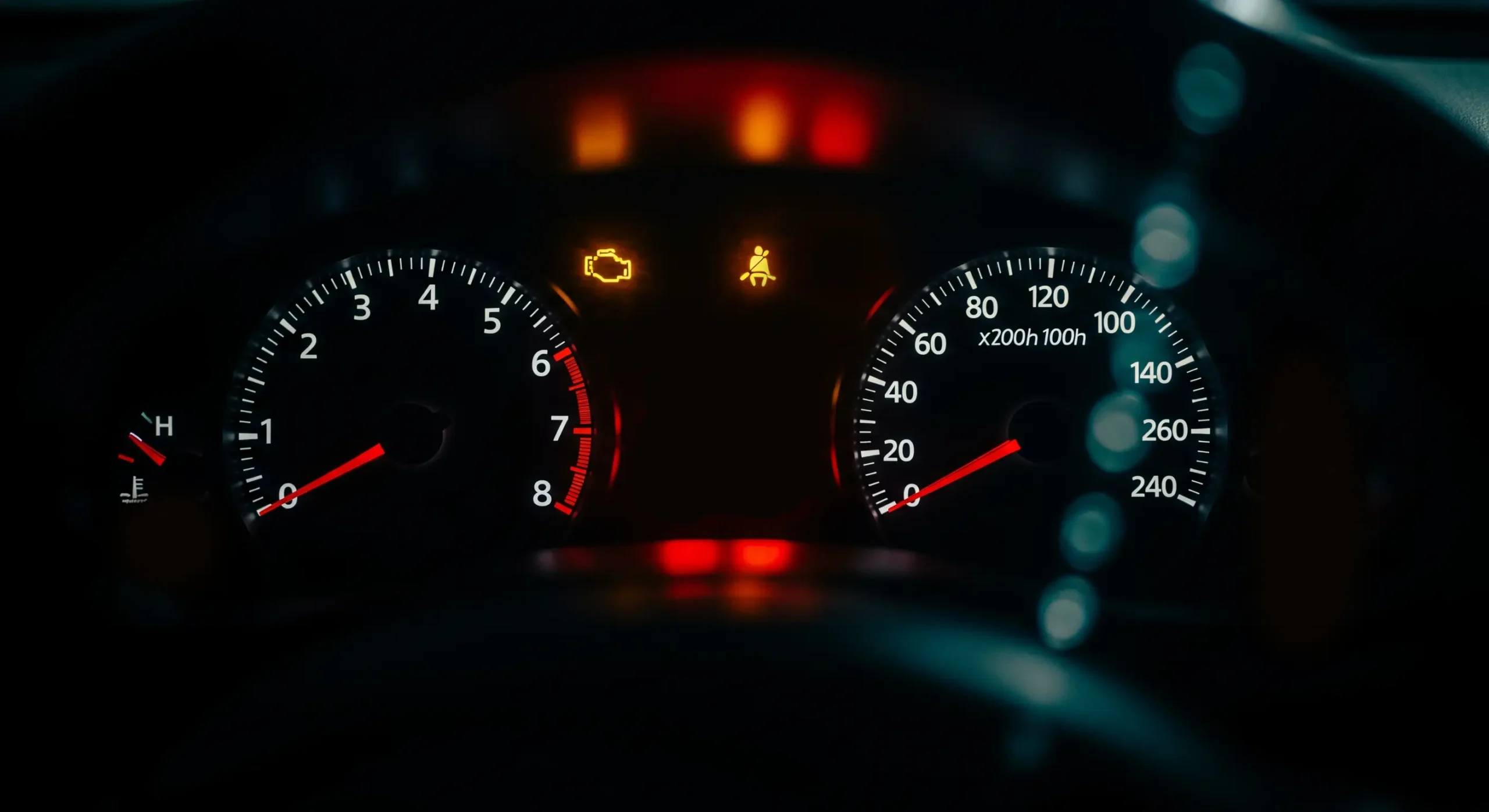
- Any dashboard warning light that stays on (not just at startup)
- Grinding or squealing noise when braking
- Car pulling to one side while driving straight
- Engine running rough, misfiring, or hesitating
- Fluid spots where the car is regularly parked
- Vibration in the steering wheel at highway speed

The Problem With Every Other System Parents Try
You’ve probably already tried to solve this. Most parents do. Here’s why the usual approaches fall apart — and what actually works.
The Spreadsheet
You create it in a burst of organizational energy. It has columns for service type, date, mileage, cost, next due date. It is beautiful. Six weeks later nobody has updated it because nobody remembered to update it, because a spreadsheet doesn’t remind you that it exists. A document that requires you to remember to check it will not help you in the exact moments you forget to check it.
The Glovebox Folder
Physical receipts stuffed into a folder in the car. This system works reasonably well — until your teenager cleans out the glovebox, or until you need to check the service history from across town, or until you’re trying to sell the car and realize the folder only goes back fourteen months. Paper also doesn’t send you a reminder that the next oil change is due in 800 miles.
Telling Your Teen to Handle It
This is the right long-term goal — teaching your teenager to be a responsible car owner. But “responsible car ownership” is a skill that takes years to develop, and the cost of the learning curve is measured in repair bills. Handing a seventeen-year-old full responsibility for tracking a maintenance schedule without any support system is setting them up to fail at an expensive task.
Calendar Reminders
Better than nothing. But calendar reminders are set by date, not by mileage — and your teenager might drive 3,000 miles in three months or 800 miles in the same period depending on the season, their schedule, and whether school was in session. A reminder that fires on the wrong date is either uselessly early or dangerously late.
The system that works is the one that runs itself. Not the one that requires someone to remember to check it.
This is precisely why maintenance apps built specifically for cars exist — and why they outperform every manual system. The app knows the make, model, and current mileage. It knows the manufacturer’s recommended intervals. It sends reminders automatically, at the right time, to whoever you want to notify. You don’t have to remember anything. The app does the remembering.
What "Setting It and Forgetting It" Actually Looks Like
MyAutoLog was built specifically for this problem — not just for single-vehicle owners who want to track their own car, but for families managing multiple vehicles at once. Here’s what the experience looks like for a parent of a teen driver.
Teaching Your Teen to Be a Better Car Owner
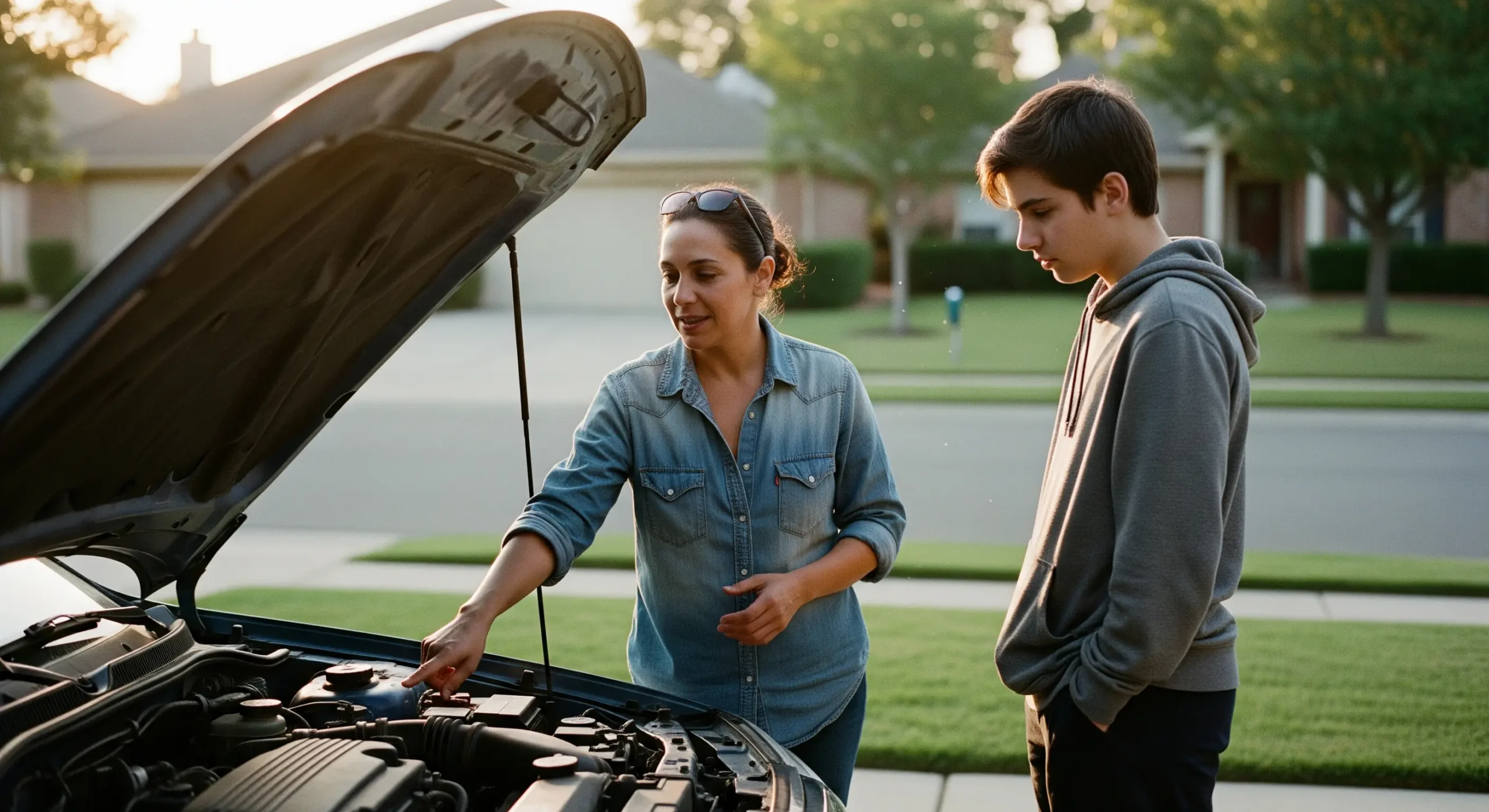
The goal isn’t to manage your teenager’s car for them forever. It’s to get them to a place where they manage it competently on their own. Here are the three things worth teaching early — practical, hands-on skills that build genuine confidence around the car.
-
How to check tire pressure Takes two minutes with a $10 gauge. Do it together the first few times so they know what the right PSI feels like. This single habit prevents more roadside emergencies than anything else.
-
How to check the oil level Pull the dipstick, wipe it, reinsert, pull again. Low is low, full is full. Takes sixty seconds and tells you immediately if the car is burning oil between changes — a crucial warning sign in older vehicles.
-
The one rule about warning lights Any dashboard light that stays on gets shown to a parent or mechanic within 24 hours. Not next week. Not when it's convenient. The cost of the wrong light going ignored for too long can be catastrophic.
-
What to do if the car overheats Pull over immediately. Turn the engine off. Do not open the radiator cap. Call for help. This is a five-minute conversation that could save an engine worth thousands of dollars.
-
How to change a tire Or at minimum, how to use roadside assistance and stay safe on the shoulder while waiting. Both are equally valid in 2025, but they need to know which one applies to their situation.
These five skills take one afternoon to teach. They represent the difference between a teenager who is genuinely equipped to handle car ownership and one who is just driving a car and hoping nothing goes wrong.
The Peace of Mind Is Worth Three Minutes of Setup
You’ve already done the hardest part of parenting a teen driver. You’ve taught them to drive. You’ve worried through the first solo trips. You’ve found a way to hand over the keys even when every instinct was telling you to hold on a little longer.
Making sure the car itself is safe and maintained is a smaller problem — and it’s one that technology has genuinely solved. You don’t need a spreadsheet, a folder, or a recurring conversation that makes everyone feel bad. You need a system that runs in the background and tells you when something needs attention.
You can’t be in that car with them every time they drive. But you can make sure the car is never the reason something goes wrong.
Stop Hoping Nothing Gets
Forgotten.
Add your teen's car in 3 minutes. Get automatic reminders for every service interval. Track every vehicle in your family from one place.

Common Questions from Parents
Teenagers should check their oil level at least once a month — it takes sixty seconds and tells you immediately if the car is burning oil between changes. Oil changes themselves should happen every 5,000 to 7,500 miles, or as specified in the vehicle's owner's manual. Many newer vehicles have an oil life monitor that alerts the driver when a change is due. Setting up automatic reminders in a car maintenance app ensures this never gets forgotten between checks.
Teen drivers should know how to check tire pressure monthly, check oil level monthly, identify dashboard warning lights (and know to report them immediately), check wiper fluid, and know when their next scheduled service is due. The single most important habit is never ignoring a warning light — any light that stays on should be reported to a parent or mechanic within 24 hours, not next week.
The most reliable method is using a car maintenance app that supports multiple vehicles and sends automatic reminders when service is due. carmaintenance.app lets parents add their teenager's vehicle alongside their own, see all vehicles in a single dashboard, and receive reminders when oil changes, tire rotations, or other services are coming up — without relying on the teen to remember or the parent to check manually.
Neglected maintenance leads to significantly higher repair costs over time. The most common consequences are engine damage from skipped oil changes, which can cost $3,000–$8,000 to repair; premature tire wear or blowouts from incorrect pressure; brake failure from worn pads; and overheating from ignored coolant issues. Beyond cost, some of these failures create genuine safety risks — worn brakes and underinflated tires both affect the car's ability to stop quickly in an emergency.
Start with the manufacturer's recommended maintenance schedule in the vehicle's owner's manual — or enter the VIN into carmaintenance.app and it pulls the full schedule automatically. Key intervals to set up immediately are oil changes every 5,000–7,500 miles, tire rotation every 6,000–8,000 miles, and a brake inspection annually. The app then sends reminders before each service is due so neither you nor your teenager has to track it manually.
The three most safety-critical maintenance items for teen drivers are tires (correct pressure and adequate tread depth), brakes (pads should be replaced before they wear completely), and oil changes (engine lubrication prevents catastrophic mechanical failure while driving). These three directly affect the driver's ability to control the vehicle and stop safely in an emergency — they should always be prioritized over cosmetic or comfort-related maintenance.