Toyota Tundra Maintenance Schedule – 2022, 2023, 2024, 2025, 2026

The Toyota Tundra maintenance schedule for 2022, 2023, 2024, and 2025 covers one of the most significant redesigns in pickup truck history — and one of the most debated. When Toyota replaced the beloved naturally aspirated 5.7L V8 with a twin-turbocharged 3.5L V6 for the 3rd generation Tundra, owners who’d trusted the old engine for 200,000+ miles were understandably skeptical. Years later, the V35A-FTS has built its own reputation — but it’s a more complex engine that rewards careful, consistent maintenance more than the old V8 ever did. Get it right and the reliability data from owners now approaching 100,000+ miles is genuinely encouraging. Get it wrong — wrong oil interval, wrong viscosity, skipped spark plugs — and you’ll find out why turbocharged engines are less forgiving than the truck they replaced.

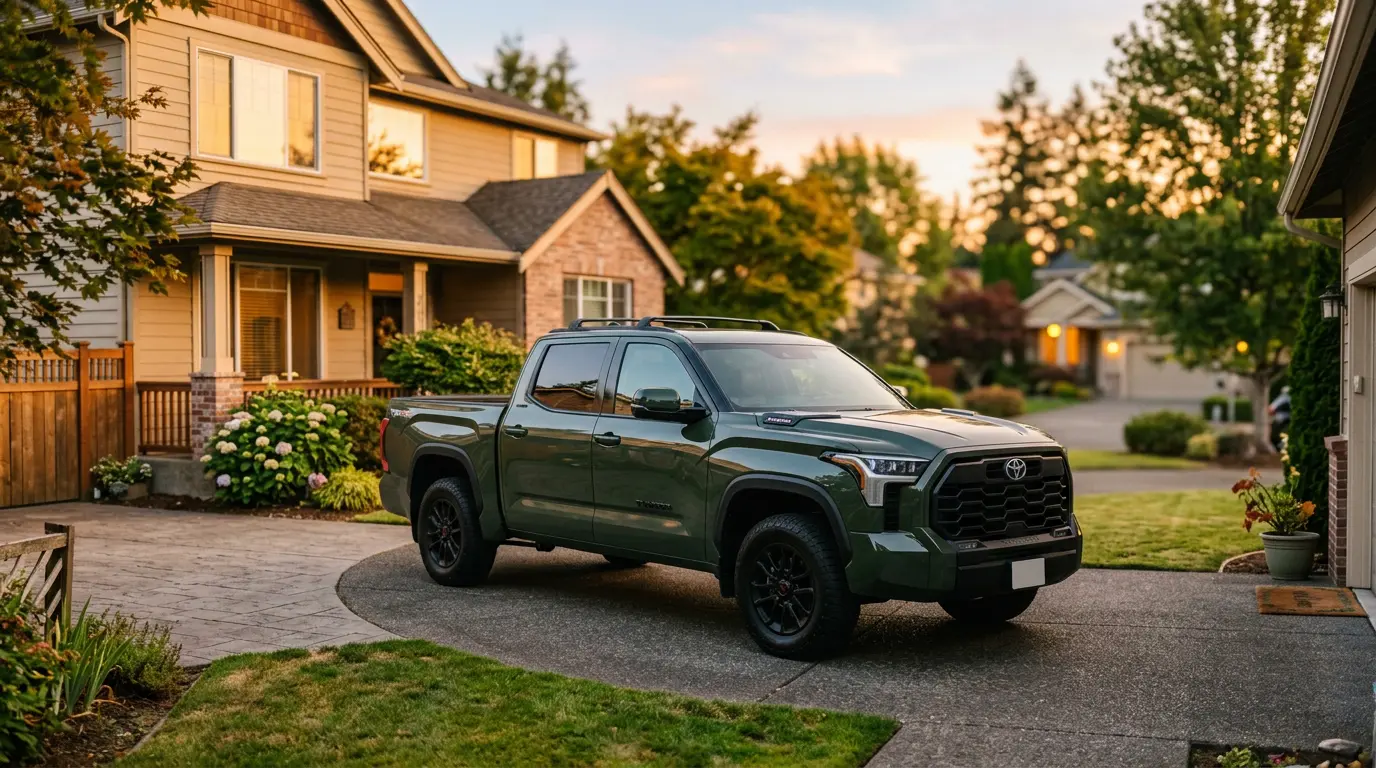
2024 Army Green Toyota Tundra TRD Pro 3rd generation front three-quarter view — 3.5L V35A-FTS twin-turbo V6

The Toyota Tundra maintenance schedule for the 3rd generation covers one of the most significant redesigns in pickup truck history — and one of the most debated. When Toyota replaced the beloved naturally aspirated 5.7L V8 with a twin-turbocharged 3.5L V6 for 2022, owners who'd trusted the old engine for 200,000+ miles were understandably skeptical. Years later, the V35A-FTS has built its own reputation — but it's a more complex engine that rewards careful, consistent maintenance more than the old V8 ever did.

This guide covers every interval, every OEM part number, and the i-Force Max hybrid's unique service items — so you can maintain your 3rd gen Tundra with the same confidence that made the previous generation legendary.

One Engine Code, Two Powertrains

Both the standard i-Force and the i-Force Max hybrid share the same V35A-FTS 3.5L twin-turbo V6 block. The i-Force Max adds a 48V integrated starter-generator (eAxle motor) and a larger battery pack for hybrid assist. Core maintenance items — oil filter, air filter, cabin filter, spark plugs — use the same OEM part numbers for both powertrains. The hybrid adds additional service items on top of the standard schedule.

Free Download

Keep your Tundra
running forever.

Add your Toyota Tundra in 3 minutes. Get automatic reminders for every service interval — track every vehicle from one place.

MyAutoLog icon
Download on the App Store
Free · iOS · No card required

Toyota Tundra Maintenance Schedule 2022–2025 at a Glance

Factory-recommended service intervals for all 2022–2025 Tundra 3rd gen models under normal driving conditions. Toyota's official oil change interval for the 3rd gen Tundra is 10,000 miles or 12 months — longer than the older Tundra generations. Under severe conditions — towing, dusty environments, frequent short trips, or extreme temperatures — shorten to 5,000 miles or 6 months.

IntervalService ItemNotes & OEM Part #
10,000 mi / 12 mo Engine Oil & Filter Change 0W-20 full synthetic. OEM filter: 90915-YZZN3 (also 90915-10010). 7.7 qt with filter.
5,000 mi Tire Rotation Rotate every 5,000 miles — half the oil change interval. Critical on 4WD TRD models.
Every 6 months Visual Brake Inspection Inspect pad thickness; replace at ≤2mm. i-Force Max: pads last longer due to regen braking.
15,000 mi / 1 yr Cabin Air Filter 87139-0C010 — all 3rd gen Tundra trims. Replace annually in dusty regions.
15,000 mi 12V Battery Inspection Inspect terminals and load. Replace every 3–5 years. i-Force Max has separate 12V aux battery.
30,000 mi Engine Air Filter 17801-F4010 — all 2022–2025 Tundra. Inspect sooner in dusty or off-road use.
30,000 mi Brake Fluid Inspection Replace if moisture exceeds 3%. Every 2 years for i-Force Max and severe use.
30,000 mi Front & Rear Differential Fluid 4WD models. Replace at 30k for towing or off-road use; inspect only for light use.
30,000 mi Transfer Case Fluid — 4WD 4x4 models. Replace sooner under heavy off-road or towing conditions.
40,000 mi Spark Plugs — V35A-FTS (Both Powertrains) V6 = 6 plugs — not 4, not 8. Iridium. Replace every 40,000 miles. Confirm OEM PN by VIN.
60,000 mi Automatic Transmission Fluid 10-speed automatic (AA80E). Severe/towing use. Toyota ATF Type T-IV or WS.
i-Force Max Only Hybrid Battery System Inspection At each major service — check HV battery health, cooling function, and cell balance.
i-Force Max Only Inverter Coolant Inspect / Replace Inspect at 60,000 miles; replace at 100,000 miles per Toyota owner's manual.
100,000 mi Engine Coolant (Toyota Super Long Life) Toyota SLLC pink/red coolant — do not mix with green. Check condition at 60,000 miles.
Every 3 years Brake Fluid Replacement DOT 3. Every 2 years for i-Force Max hybrid or heavy towing use.
As needed Wiper Blades Driver: 26" · Passenger: 20"
MyAutoLog app icon

One App. Zero Stress.

Join thousands of Tundra owners who never miss an oil change. Simple, automated, and built for your Toyota.

Download on the App Store
★★★★★ 5/5
iOS Exclusive

Tundra 3rd Gen Oil Change Guide by Powertrain

One of the simplest things about maintaining the 3rd gen Tundra: both powertrains use identical oil specs, identical oil filters, and identical oil capacity. The standard i-Force and the i-Force Max hybrid share the V35A-FTS engine block — the Max just adds the electric motor system. There's no filter mix-up to worry about between powertrain variants, unlike some other trucks in this segment.

3.5L V35A-FTS — i-Force
SR · SR5 · Limited · Platinum · 1794 · TRD Pro · Capstone
Oil Filter90915-YZZN3
Oil Capacity7.7 qt (7.3L) with filter
Oil Spec0W-20 Full Synthetic
StandardAPI SP / ILSAC GF-6A
Normal Interval10,000 mi / 12 months
Severe Interval5,000 mi / 6 months
3.5L V35A-FTS — i-Force Max
Limited · Platinum · 1794 Edition · TRD Pro · Capstone
Oil Filter90915-YZZN3
Oil Capacity7.7 qt (7.3L) with filter
Oil Spec0W-20 Full Synthetic
StandardAPI SP / ILSAC GF-6A
Normal Interval10,000 mi / 12 months
Severe Interval5,000 mi — see hybrid note ▼
10,000 Miles — But Consider Your Driving

Toyota's 10,000-mile interval applies to normal driving conditions with full synthetic 0W-20. However, the V35A-FTS is a twin-turbocharged engine — turbos run hot and add combustion blowby that degrades oil faster than a naturally aspirated engine at the same mileage. If you tow regularly, make frequent short trips, live in extreme heat, or spend time on dusty roads, follow the 5,000-mile severe interval. Many experienced Tundra owners split the difference at 7,500 miles regardless of conditions. It's cheap insurance on an expensive truck.

Toyota Tundra Maintenance Schedule

Engine Air Filter & Cabin Air Filter

Engine Air Filter — 17801-F4010

Replace every 30,000 miles under normal conditions. For TRD Pro and Capstone owners who take the Tundra off-road, or anyone driving in dusty, unpaved, or smoky environments, inspect at 15,000 miles and replace as needed. A clogged air filter on the twin-turbo V35A-FTS is particularly impactful — restricted airflow forces the turbos to work harder to hit boost targets, which accelerates wear.

OEM part 17801-F4010 fits all 2022–2025 Tundra models — both i-Force and i-Force Max. You may encounter 17801-YZZ17 in some parts lookups; this is an alternate part number for the same filter.

Cabin Air Filter — 87139-0C010

Replace every 15,000 miles or annually, whichever comes first. Located behind the glove box and installs without tools in about 5 minutes on the 3rd gen. Signs it's overdue: reduced HVAC airflow, musty smell with the AC running, or visible discoloration when removed.

OEM part 87139-0C010 fits all 2022–2025 Tundra models and also crosses to the same generation Sequoia. If you regularly drive in areas with heavy wildfire smoke, construction dust, or high pollen, consider replacing annually regardless of mileage.

Spark Plugs: The Number That Surprises Everyone

Here's the detail that trips up nearly every 3rd gen Tundra owner ordering parts for the first time: your truck needs 6 spark plugs. Not 4 (that's a 4-cylinder assumption) and not 8 (that's a V8 assumption). The V35A-FTS is a V6 — six cylinders, one plug per cylinder, six total. Parts stores' online fitment guides sometimes pull up V8 results for Tundra searches because the previous generation used a V8 for so long. Always verify you're ordering 6.

Toyota recommends replacing the iridium spark plugs every 40,000 miles on the 3rd gen Tundra. This is a shorter interval than what you'd see on a naturally aspirated engine because the twin-turbo V35A-FTS runs at higher cylinder pressures and temperatures that are harder on plugs. Don't attempt to re-gap iridium plugs — they are factory pre-gapped.

EngineModelsOEM Part #IntervalQty
3.5L V35A-FTS (i-Force) SR · SR5 · Limited · Platinum · 1794 · TRD Pro · Capstone Confirm by VIN 40,000 mi 6
3.5L V35A-FTS (i-Force Max) Limited · Platinum · 1794 · TRD Pro · Capstone Confirm by VIN 40,000 mi 6
Always Confirm the Spark Plug OEM PN by VIN

Toyota has used multiple OEM spark plug part numbers across 3rd gen Tundra production runs. Rather than risk an incorrect part, confirm your specific plug via Toyota's parts lookup at toyota.com using your VIN, or ask your dealer's parts counter. The plug spec is the same for both i-Force and i-Force Max. Always order 6.

carmaintenance.app · Free Download

Your Tundra is
built to last.

Keep it maintained right! Add your vehicle in 3 minutes. Get automatic reminders for every service interval. Track every vehicle in your family from one place and have peace of mind.

carmaintenance.app icon
Download on the App Store
Free to use · iOS · No credit card required

i-Force Max Hybrid Maintenance

The i-Force Max pairs the 3.5L twin-turbo V6 with a 48V electric motor integrated into the transmission (eAxle system) and a nickel-metal hydride battery pack. The combination adds 130+ lb-ft of torque and 56 extra horsepower over the standard i-Force, making it the most capable Tundra ever built for towing. But it also adds hybrid-specific service items that don't exist on the standard powertrain.

Beyond the Standard Tundra Schedule

These items apply to the i-Force Max only, in addition to all standard oil, filter, spark plug, and tire service.

HV Battery Inspection
At each major service — check state of health and cooling function
Inverter Coolant Inspect
Every 60,000 miles
Inverter Coolant Replace
Every 100,000 miles
12V Aux Battery
Inspect annually; replace every 3–5 years
Brake Fluid
Every 2 years — regen braking accelerates moisture absorption
eAxle System Check
Inspect at each major service for fluid leaks or error codes

i-Force Max brake pads typically last significantly longer than those on the standard i-Force because regenerative braking handles most light deceleration. However, because friction brakes engage less frequently, rotor rust can develop faster. Inspect rotors for deep pitting or scoring at each service even if pads are still within spec.

i-Force Max and Oil Changes — Don't Skip Based on Low Mileage

The i-Force Max uses its electric motor heavily at low speeds, which means the combustion engine runs less in city driving. Some owners are tempted to skip oil changes when mileage accumulates slowly. Don't. Engine oil degrades on a calendar basis even when the engine runs infrequently — moisture absorption and oxidation occur regardless of how often you've pushed the throttle. Follow the 12-month calendar interval as a minimum, and track actual engine-on hours rather than just odometer miles if you want to be precise about it.

Side-by-side comparison of the Toyota 5.7L 3UR-FE V8 and the 3.5L V35A-FTS twin-turbo V6

Tundra Severe Condition Maintenance Schedule

Toyota defines severe driving conditions as: frequent towing or payload near max capacity, frequent trips under 5 miles, dusty or off-road environments, extreme cold below 0°F or hot climates above 110°F, and prolonged idling. Most Tundra owners — especially those using the truck as a truck — fall into at least one of these categories. The standard 10,000-mile schedule was designed for typical passenger-car-style commuting, not real truck use.

Service ItemNormal IntervalSevere Interval
Engine Oil & Filter10,000 mi / 12 mo5,000 mi / 6 mo
Engine Air Filter30,000 mi15,000 mi or per inspection
Cabin Air Filter15,000 mi / 1 yr12,000 mi or per inspection
Brake FluidEvery 3 yearsEvery 2 years
Transmission FluidInspect at 60kReplace at 60,000 mi for towing
Front/Rear DifferentialInspect at 30kReplace at 30,000 mi
Transfer Case Fluid (4WD)30,000 mi15,000–20,000 mi for off-road use
Tire Rotation5,000 mi5,000 mi — maintain this regardless
TRD Pro & Off-Road Owners

If you run the Tundra on unpaved roads, trails, or through water crossings regularly, treat every service interval as severe. Differential and transfer case fluid contamination from water intrusion is the biggest maintenance risk for off-road Tundras — inspect both for milky discoloration at every oil change and replace immediately if you see it, regardless of mileage.

MyAutoLog

Simplify Your
Toyota Tundra Maintenance

Use MyAutoLog to manage maintenance schedules, log repairs, monitor mileage, and keep your Tundra organized for years of reliable performance

Download on the App Store
Highly Recommended

Twin-Turbo V6 vs the Old 5.7L V8: Maintenance Reality Check

The 5.7L 3UR-FE V8 that powered Tundras from 2007 through 2021 earned a near-mythical reputation for longevity — 300,000-mile engines weren't unusual, and it was widely considered one of the most reliable truck engines ever made. When Toyota replaced it with the twin-turbo 3.5L V6, the forums lit up with concern. Here's what the maintenance data actually shows:

Where the V6 Demands More

The V35A-FTS is fundamentally more complex than the old V8. Two turbochargers mean two sets of turbo bearings that rely entirely on clean, properly viscous oil for lubrication. High cylinder pressures from turbo boost mean accelerated spark plug wear — hence the 40,000-mile plug interval versus the 120,000-mile interval the old V8 iridium plugs managed. Variable valve timing solenoids in the V6 are also sensitive to oil contamination in ways the simpler V8 VVT-i system never was.

Where the V6 Makes Maintenance Simpler

Eight cylinders versus six means the old V8 needed 8 spark plugs and had a larger oil capacity. The new V35A-FTS holds 7.7 quarts — less than the 5.7L's 8.0 quarts — and the single oil filter location is more accessible on the 3rd gen than it was on the 2nd gen Tundra. The 10,000-mile oil change interval (versus 5,000 miles commonly recommended for the old V8 under most conditions) also means less frequent service overall, offsetting some of the added complexity.

The Bottom Line

The V35A-FTS rewards consistent maintenance more than the old V8 did. The 5.7L was famously forgiving of extended intervals and occasional neglect. The twin-turbo V6 is not — skipped oil changes or running the wrong oil viscosity will damage turbo bearings and VVT solenoids faster than any comparable failure mode on the old engine. Maintain it properly and the reliability data from owners now approaching 100,000+ miles is encouraging.

Toyota Tundra 3rd Gen OEM Part Numbers 2022–2026

All confirmed OEM part numbers for the 3rd gen Tundra. Genuine Toyota parts ensure proper fit, maintain your warranty, and avoid compatibility issues — particularly important on the i-Force Max where incorrect parts can affect hybrid battery management calibration.

Oil Filter — All Models
Engine Oil Filter
90915-YZZN3
Fits all 2022–2025 Tundra 3.5L V35A-FTS — both i-Force and i-Force Max. Superseded on later production by 90915-10010. Both are the same Denso filter.
Engine Air Filter — All Models
Air Cleaner Filter
17801-F4010
Fits all 2022–2025 Tundra. Also listed as 17801-YZZ17 in some databases — same filter. Replace every 30,000 miles, sooner in dusty conditions.
Cabin Air Filter — All Models
Cabin Air Filter
87139-0C010
Fits all 2022–2025 Tundra (and 2023+ Sequoia). Behind glove box — installs in 5 minutes without tools. Replace annually or every 15,000 miles.
Spark Plugs — All Models
Iridium Spark Plug
Confirm by VIN
V6 = 6 plugs. Iridium. Replace every 40,000 miles. Confirm exact OEM PN via toyota.com VIN lookup — multiple production PN variants exist. Do not re-gap.
Drain Plug Crush Washer
Oil Drain Plug Gasket
90430-12031
Replace at every oil change — never reuse. Drain plug torque: 30 ft-lbs (40 N·m). Reusing the crush washer is a common source of oil pan leaks on the 3rd gen.
Front Brake Pads
Front Disc Brake Pads
Confirm by VIN
Brake pad specs vary between i-Force and i-Force Max (regen braking) and AWD configuration. Confirm via toyota.com or dealer parts counter with your full VIN.
Free Download

Built for Your
Tundra’s Long Haul

Add your Toyota Tundra in 3 minutes. Get automatic reminders for every service interval — track every vehicle from one place.

MyAutoLog icon
Download on the App Store
Free · iOS · No card required

Toyota Tundra Maintenance Schedule — FAQ

The questions 2022–2026 Tundra owners search most — answered directly, for both powertrains.

Toyota recommends every 10,000 miles or 12 months under normal conditions using 0W-20 full synthetic. Under severe conditions — regular towing, short trips, extreme temperatures, or dusty environments — shorten to 5,000 miles or 6 months. Both the i-Force and i-Force Max hybrid use the same spec and interval. Many experienced Tundra owners follow a 7,500-mile interval as a conservative middle ground given the twin-turbo engine's added complexity vs. the old naturally aspirated V8.
Six spark plugs — not 4 and not 8. The V35A-FTS is a twin-turbo V6 engine. Six cylinders, one plug per cylinder, six total. This trips up many owners and even some online parts stores whose databases still expect 8 plugs from the old V8 Tundra. Always confirm you're ordering 6 before checkout. Toyota recommends replacing every 40,000 miles. Confirm the exact OEM part number via your VIN at toyota.com — multiple production variants exist.
All 2022–2026 Toyota Tundra models use OEM oil filter 90915-YZZN3. This applies to both the standard i-Force and the i-Force Max hybrid — they share the same V35A-FTS engine and the same filter. On later production runs the part number was updated to 90915-10010; this is the same Denso-manufactured filter and either is correct for your truck.
Engine air filter for all 2022–2025 Tundra: 17801-F4010 (also listed as 17801-YZZ17 in some databases — same filter). Replace every 30,000 miles. Cabin air filter for all 2022–2025 Tundra: 87139-0C010. Replace every 15,000 miles or annually. Both part numbers fit the i-Force and i-Force Max. One part number for each — no powertrain variants to worry about.
It shares all core intervals with the standard i-Force. Additional hybrid-specific items include: HV battery system inspection at each major service, inverter coolant inspection at 60,000 miles (replacement at 100,000), 12V auxiliary battery inspection annually, and brake fluid replacement every 2 years (vs. 3 years for the standard model). Brake pads last significantly longer on the i-Force Max due to regenerative braking handling most light deceleration.
The 5.7L 3UR-FE earned a legendary reputation and is a high bar to clear. The V35A-FTS has now accumulated meaningful real-world data through multiple years of ownership and the picture is generally positive when the engine is properly maintained. The key difference is that the V35A-FTS is less forgiving of maintenance neglect than the old V8 was. Consistent oil changes at the right interval, the correct 0W-20 viscosity, and timely spark plug replacement at 40,000 miles are more important on the turbocharged V6 than they ever were on the naturally aspirated V8. Maintain it properly and the reliability data is encouraging.
Yes — MyAutoLog is a free iOS app that tracks all service intervals for your Tundra, sends push reminders before each one hits, and supports both the i-Force and i-Force Max hybrid powertrains. Set custom intervals for severe conditions and towing, get the 40,000-mile spark plug reminder built in, and manage multiple vehicles in one dashboard. No subscription required.